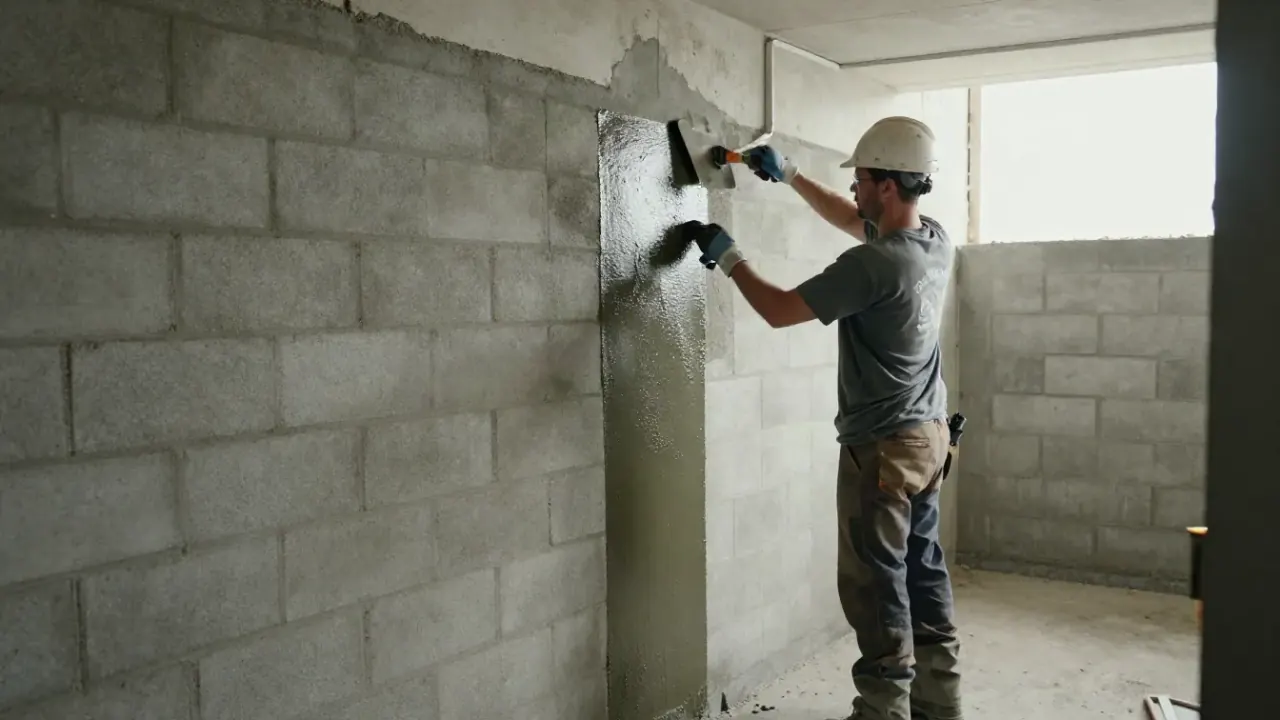
French drain installation Warren OH for drier foundations
french drain installation Warren OH gives homeowners a practical way to collect groundwater and route it away from a foundation, basement, or soggy yard. Warren Waterproofing Pros installs drainage for properties dealing with seepage, pooling, and recurring wet floors. We assess where water enters, map a workable outlet, and match the system to your site so you know what the work involves before excavation begins.
French drain installation includes diagnosing the water route, planning collection and discharge, installing the selected pipe-and-gravel assembly, and checking flow. Your project may be exterior, interior, or yard-focused. Pump installation, major crack repair, extensive concrete replacement, and finish landscaping are separate work items when the property needs them; we explain how they relate before proceeding.
Water Source Inspection
We inspect pooling, damp areas, grading, downspouts, and visible foundation conditions to locate likely water entry. The route is based on what the site shows, not a standard trench layout applied to every property.
Drain Route Planning
We identify the collection line, intended slope, and discharge point. Planning also considers access, utilities, hardscape, and whether water can flow by gravity or needs to reach a sump basin.
Pipe and Gravel Bed
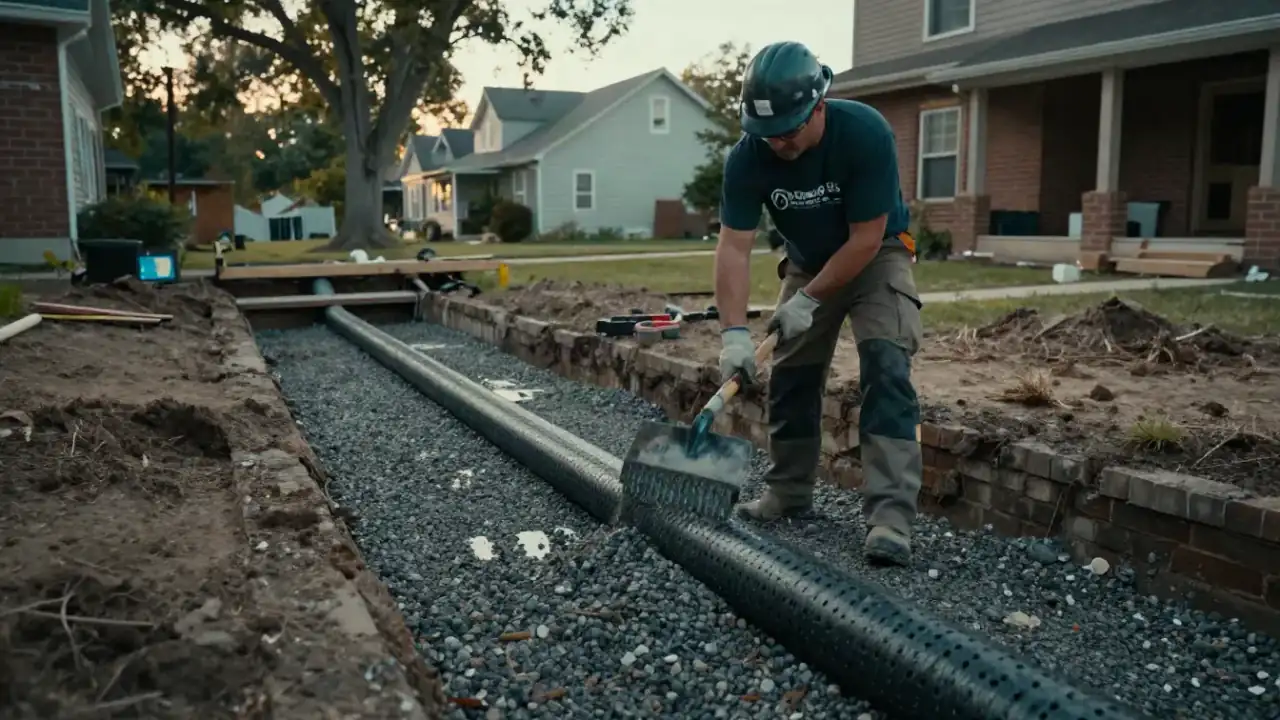
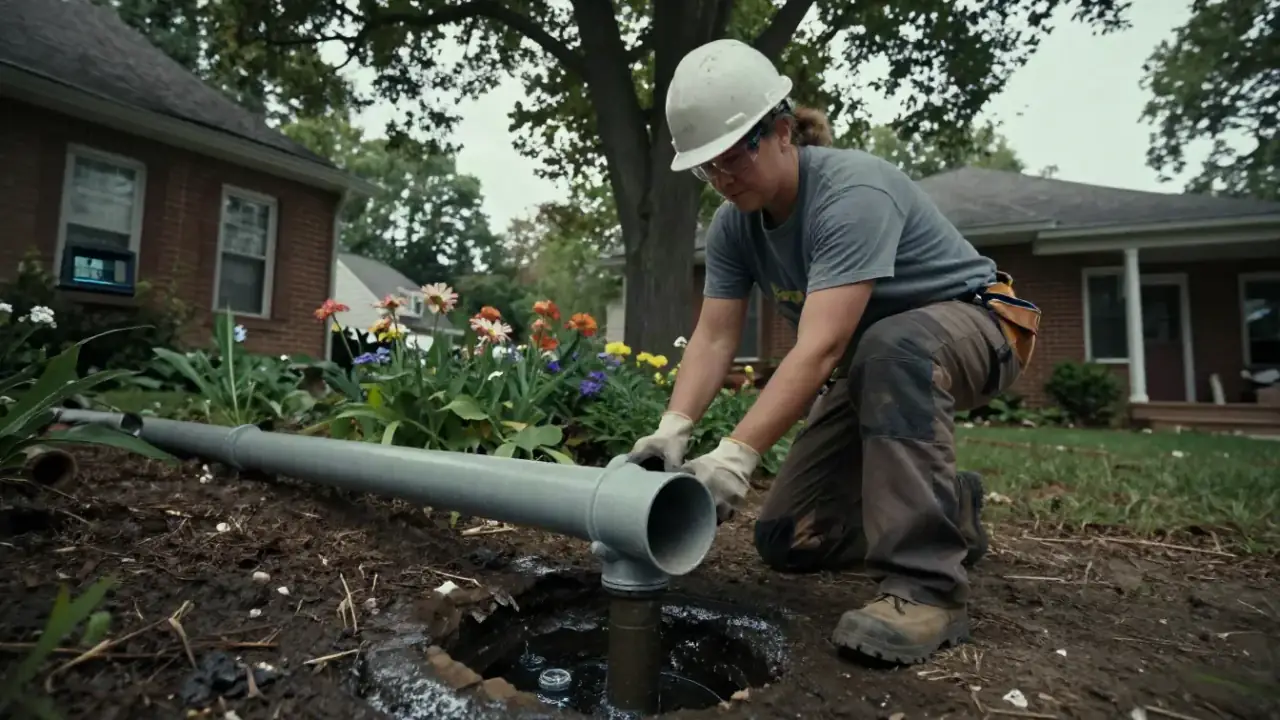
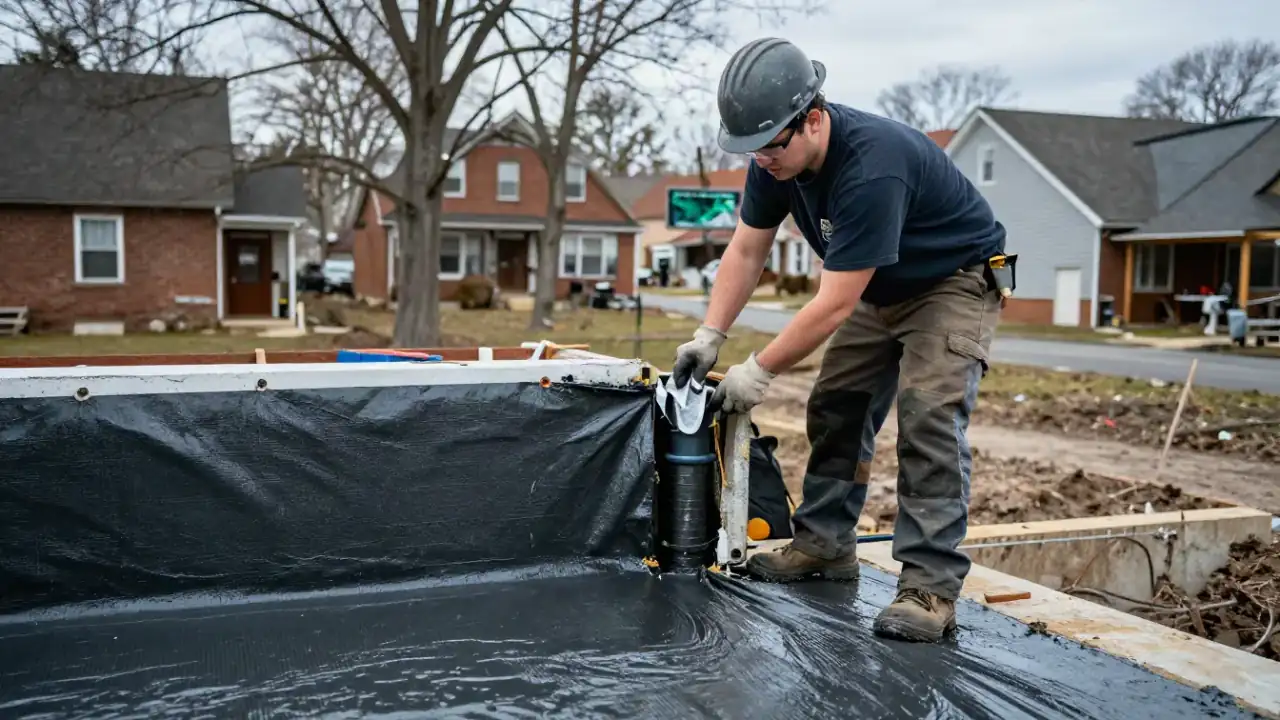
The installed assembly uses perforated drain tile set in washed gravel, with suitable separation or filtration where the design calls for it. We keep the line aligned to move collected water toward its outlet.
Outlet Connection Check
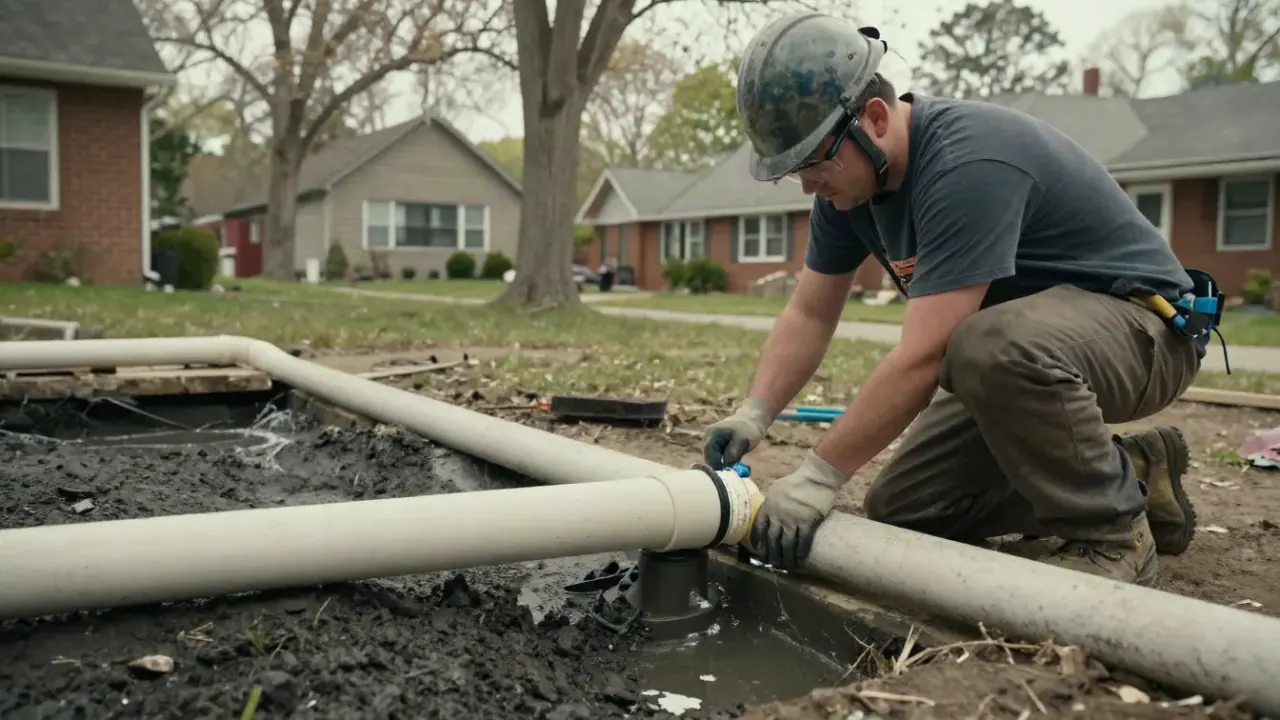
We inspect the accessible outlet, discharge pipe, and sump connection when included in the work. A drain must carry water away from the collection point; buried or blocked discharge defeats the purpose.
Work Area Restoration
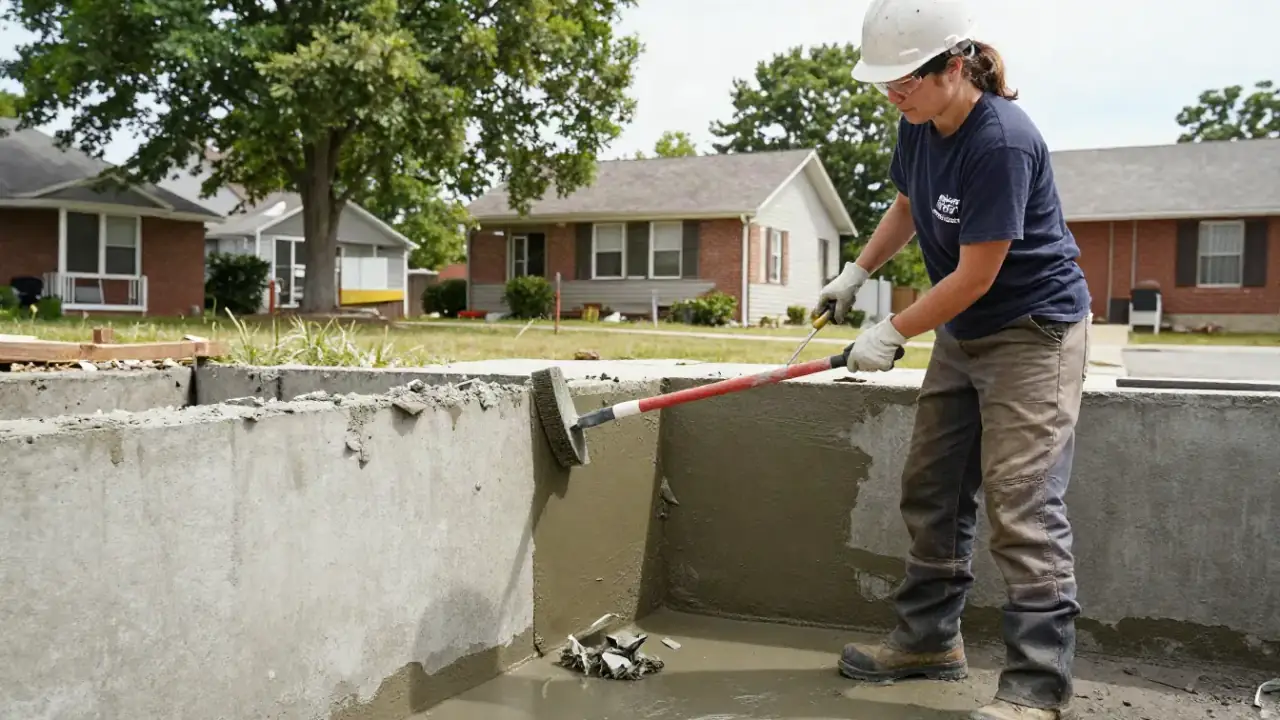
After testing, we close the trench or floor channel and restore the agreed disturbed surfaces. The amount of finish work depends on whether the route crosses lawn, paving, a basement slab, or established landscaping.
Homes and businesses.
The approach is the same for a home and a business. What changes is the access, the schedule and who needs the paperwork.
Homes and Rentals
We trace seepage, pooling, and damp floor edges before choosing an interior or exterior route. You see where the drain collects water and where it discharges.
Basement seepage after heavy rain
Low backyard pooling
Damp crawl space soil
Commercial Sites
We assess loading areas, foundation edges, and access before planning collection and discharge. Property managers get a clear route that accounts for occupied spaces and site use.
Water at below-grade entries
Wet storage-room floor edges
Runoff beside loading areas
French Drain Installation Warren OH: How It Works
A plain-language look at what French Drain Installation involves and when it is needed.
french drain installation Warren OH is a subsurface drainage service that collects groundwater in a gravel trench and carries it away from areas where it threatens a building or landscape. We excavate along the planned route, prepare a stable gravel bed, set perforated drain tile with a deliberate slope, and cover it with washed gravel and suitable soil or surface finish. At a basement, the route may lead to a sump basin and pump; in a yard, it needs a safe, lower discharge point. The layout matters as much as the pipe.
Warren properties see water problems after prolonged rain, snowmelt, and freeze-thaw cycles, especially where grading sends runoff toward a foundation. Older homes can also have failed drain tile, clogged or buried downspouts, or foundation wall cracks that let seepage through. Our french drain installation in Warren, Ohio starts by tracing the water source rather than digging a trench by guesswork. If water repeatedly pools beside your home, backyard french drain installation Warren OH may redirect it before saturated soil presses against the foundation.
A French drain collects groundwater and routes it to a planned outlet or sump.
What it is
A gravel trench with perforated pipe that collects groundwater and carries it away.
When you need it
Recurring seepage, saturated yard areas, or water pooling beside a foundation.
What to expect
Site inspection, route planning, excavation, pipe installation, flow check, and restoration.
What to Expect During Installation
French drain installation in Warren follows a measured sequence: diagnose the water, plan the route, install the collection line, and verify discharge. A straightforward project often takes one to three working days; longer routes, concrete removal, or difficult access add time.
Trace the Water
Our team walks the affected area with you and checks water marks, grading, downspout outlets, and the location of foundation cracks. A moisture meter helps compare damp areas, while a hydrostatic pressure test kit can support investigation where pressure is suspected. This visit usually takes 45 to 90 minutes, depending on the property and whether the problem is inside, outside, or both.
Trace source
Check grade
Inspect outlets
Map the Route
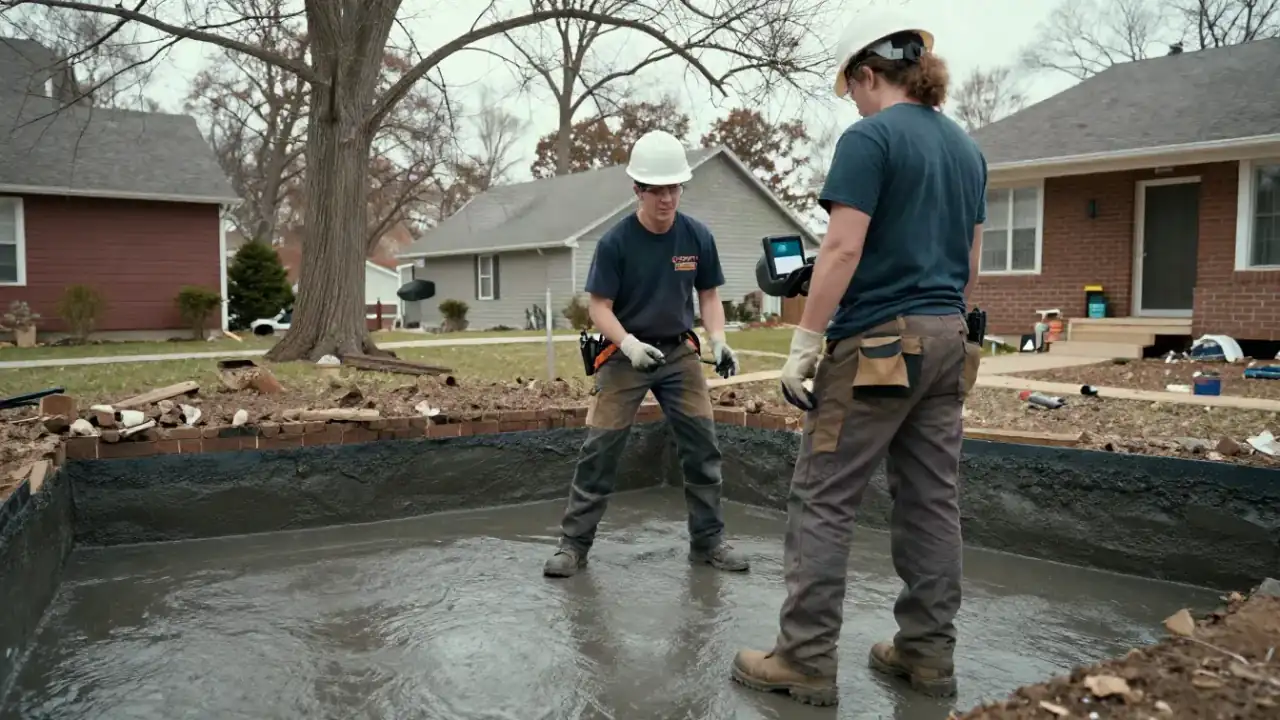
We identify the collection line, its slope, and a discharge point that moves water away from the structure. The plan accounts for utilities, basement layout, hardscape, and access for a trenching machine or hand excavation. You see where soil or concrete must be opened and where restoration is needed before installation starts.
Map route
Mark access
Plan discharge
Open and Prepare
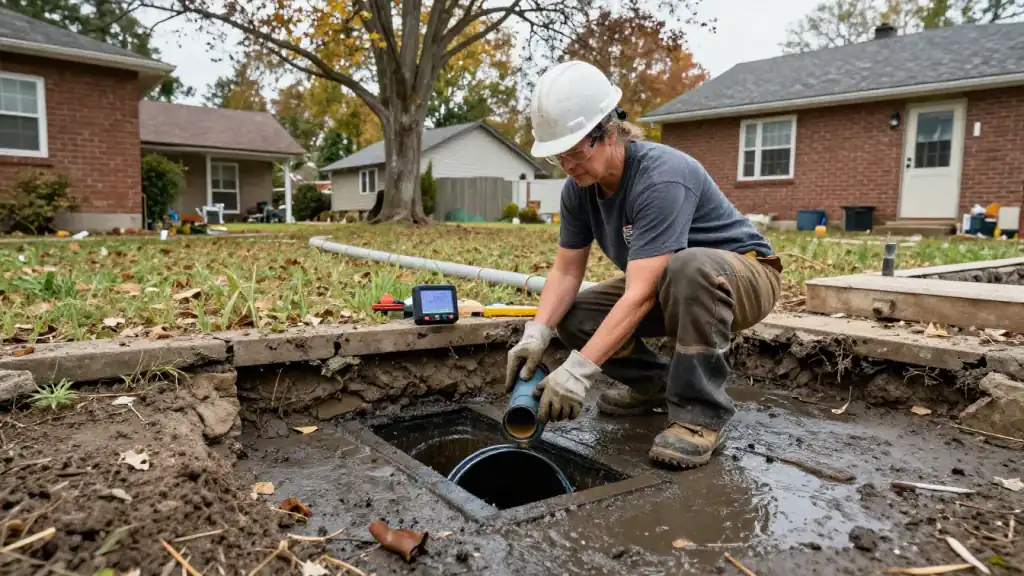
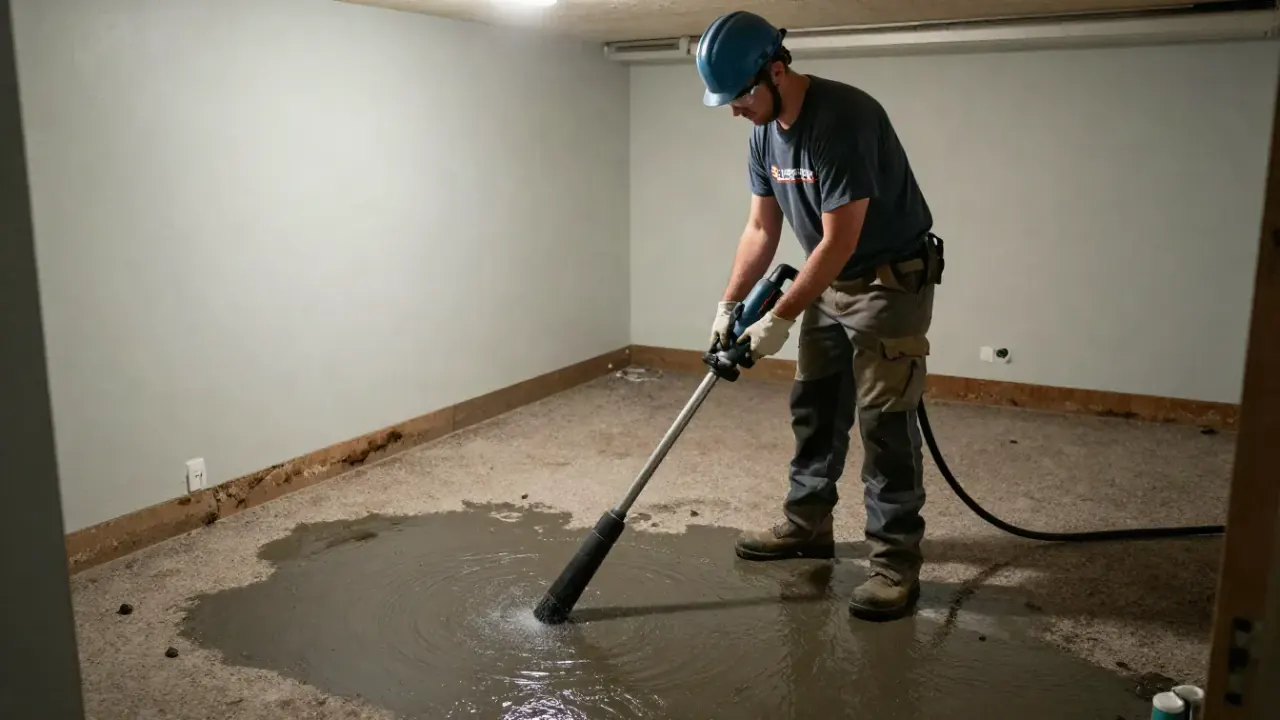
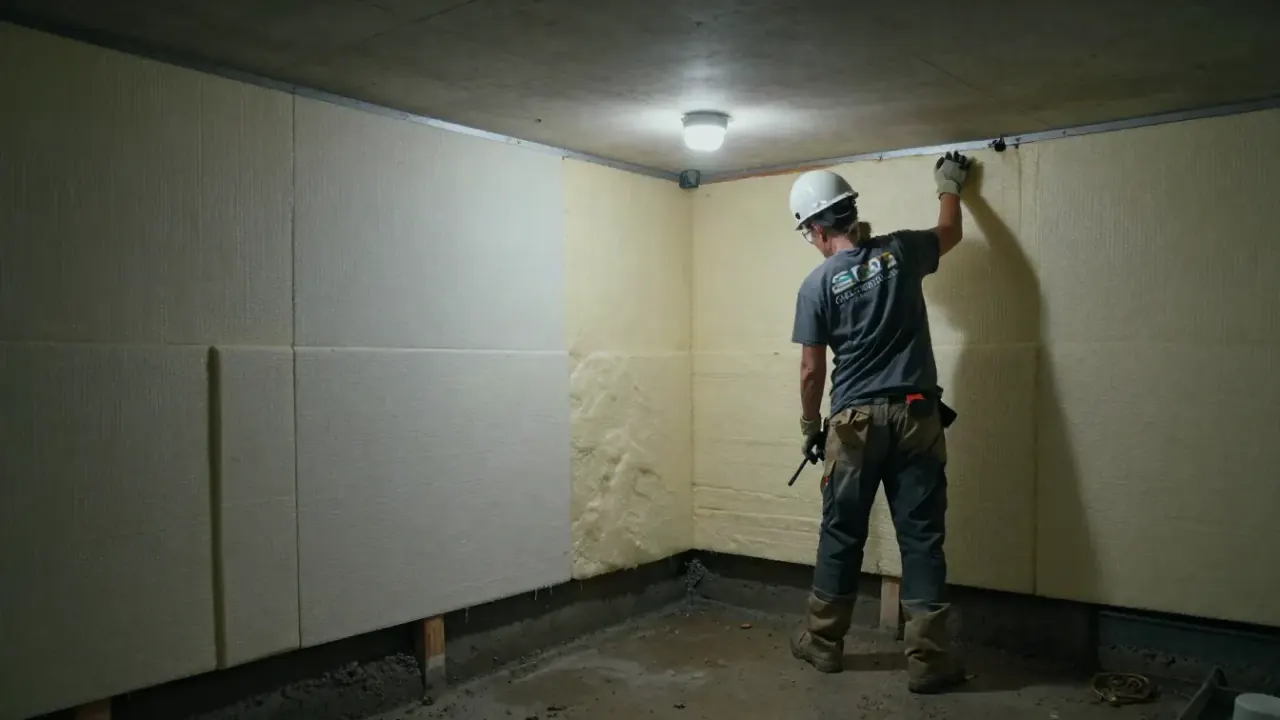
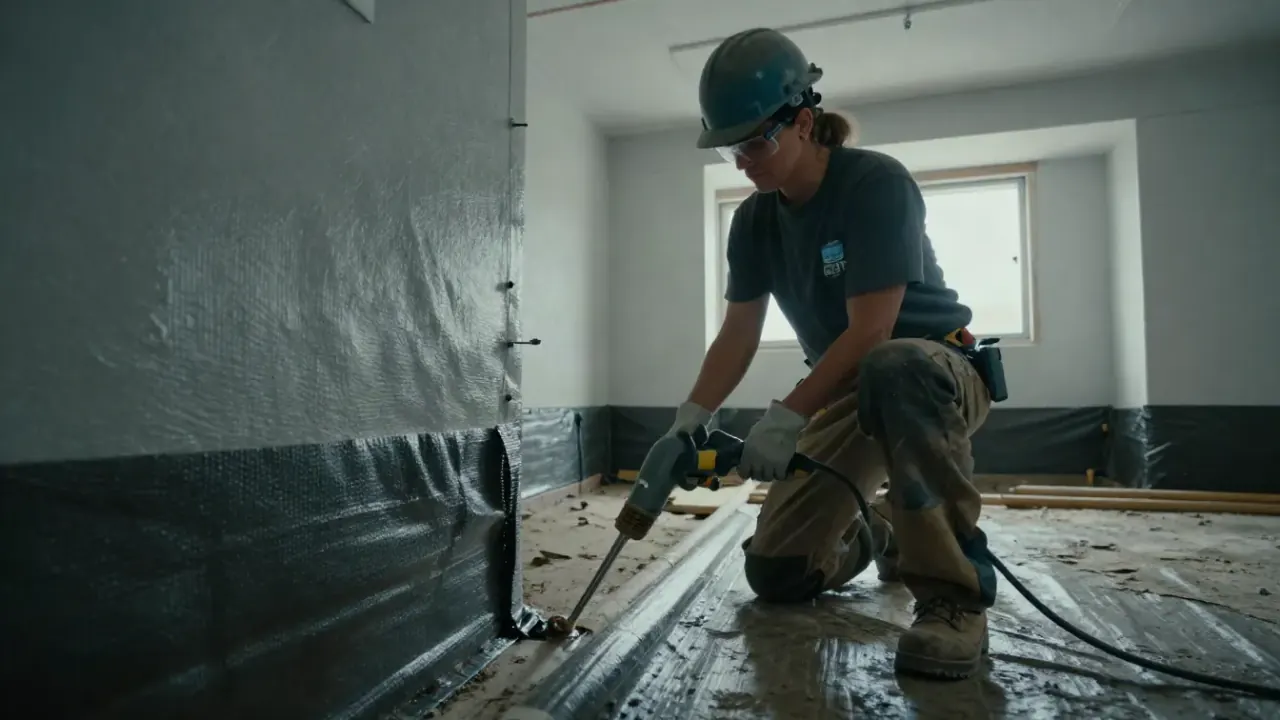
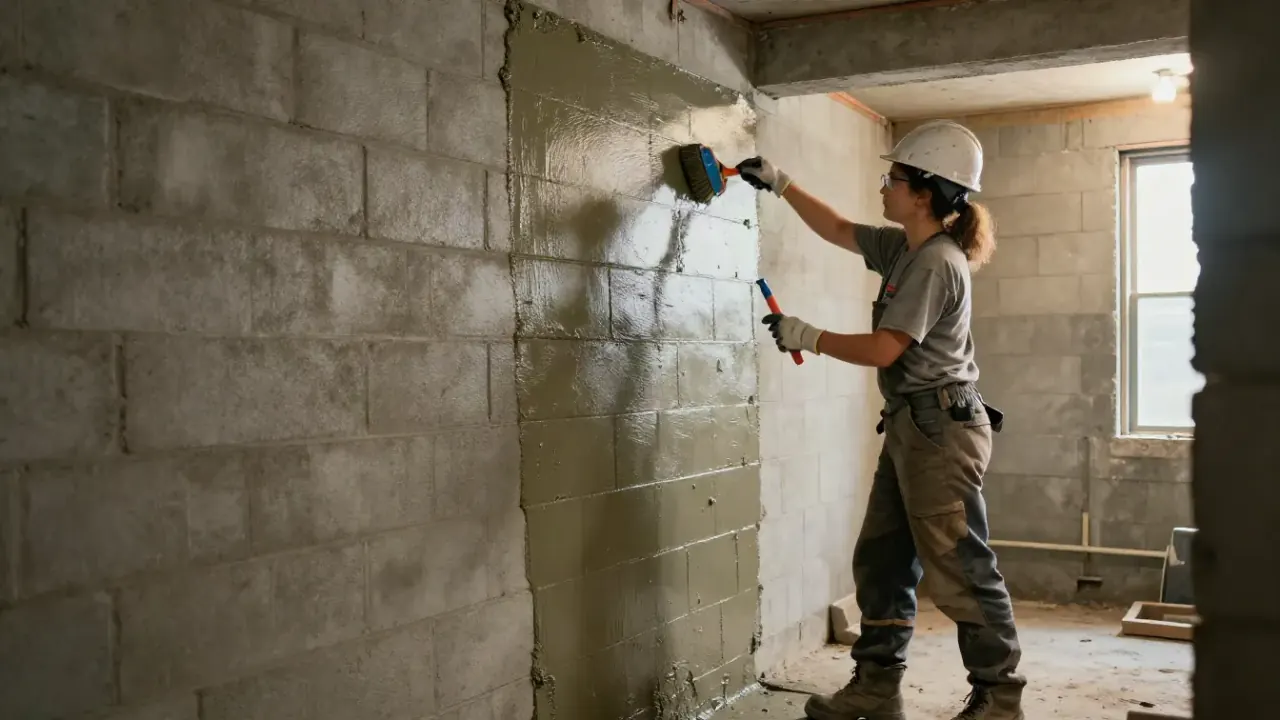
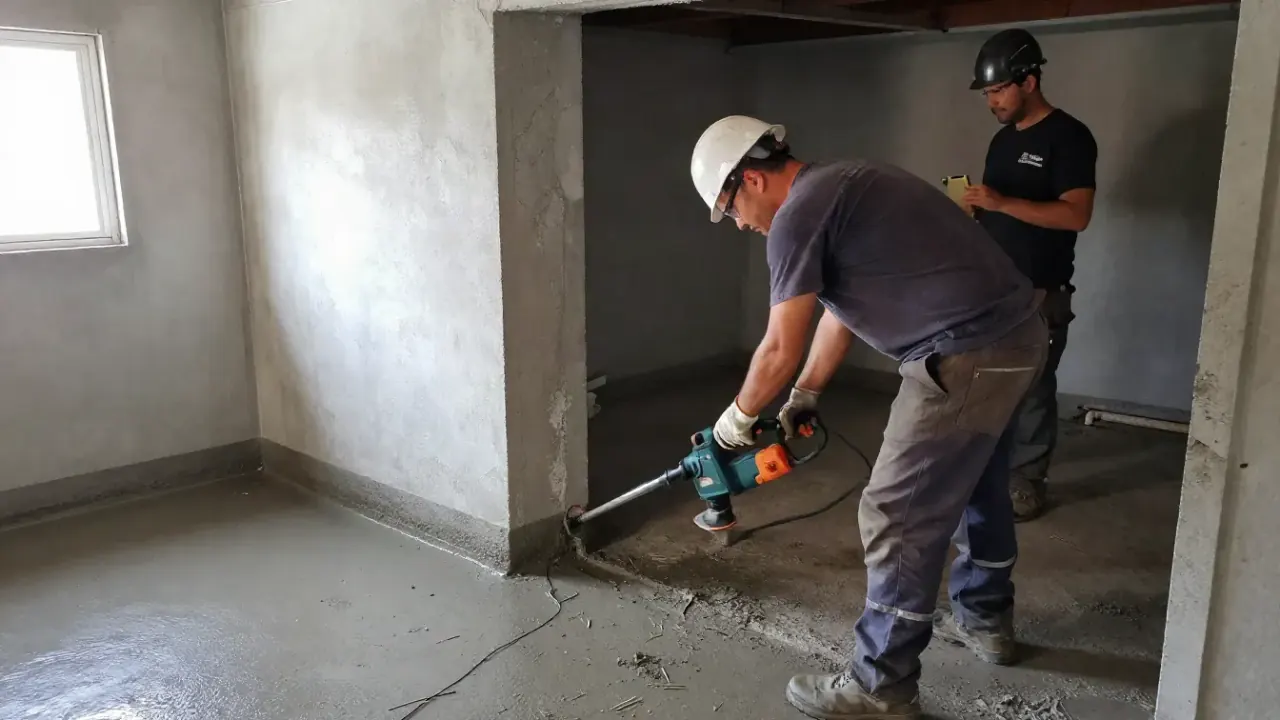
Our crew protects nearby surfaces, then excavates the approved trench. For interior work, a concrete saw opens a controlled strip along the floor perimeter; exterior work requires careful excavation beside the foundation. We remove unsuitable material, prepare the base, and keep debris contained so the active work area remains manageable.
Protect surfaces
Open trench
Prepare base
Install Drainage
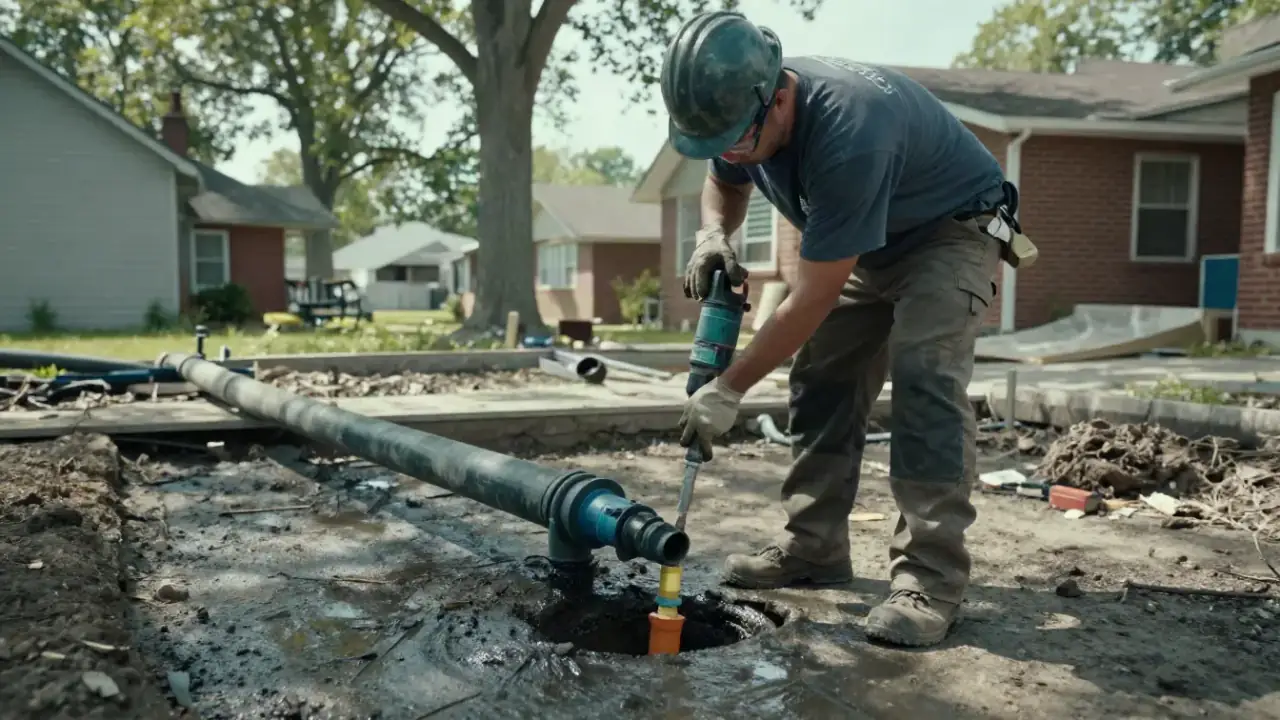
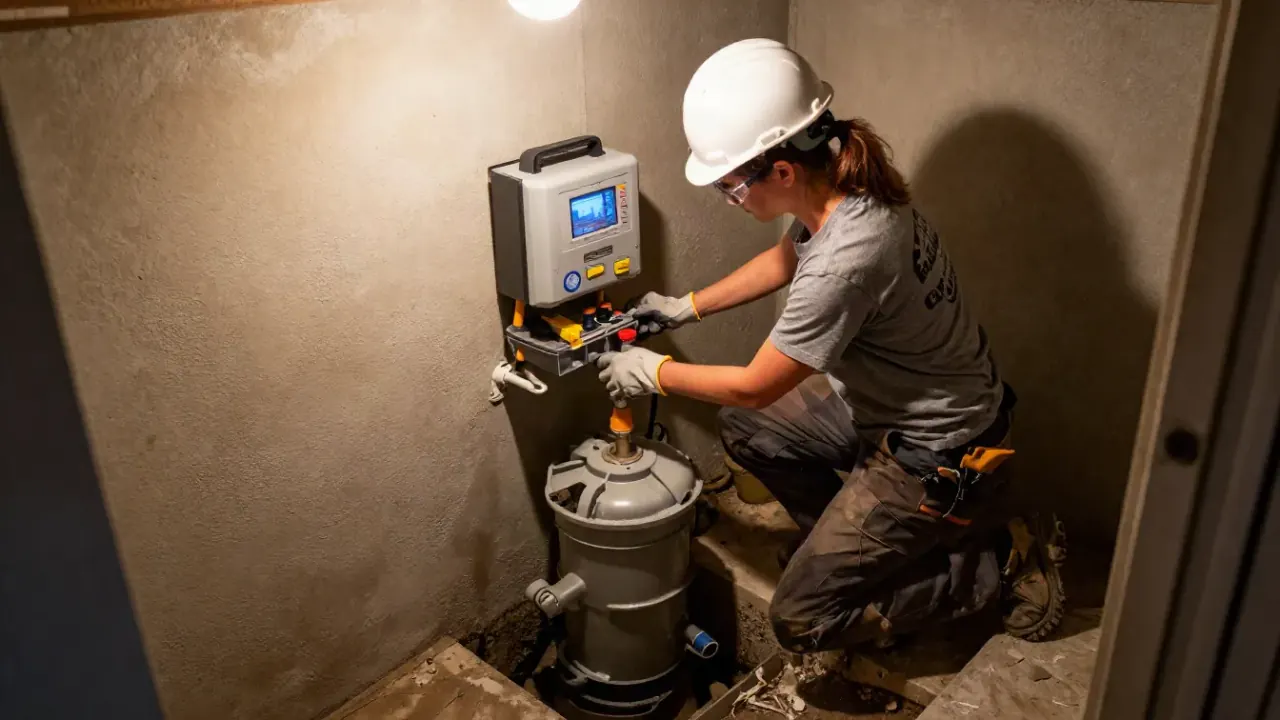
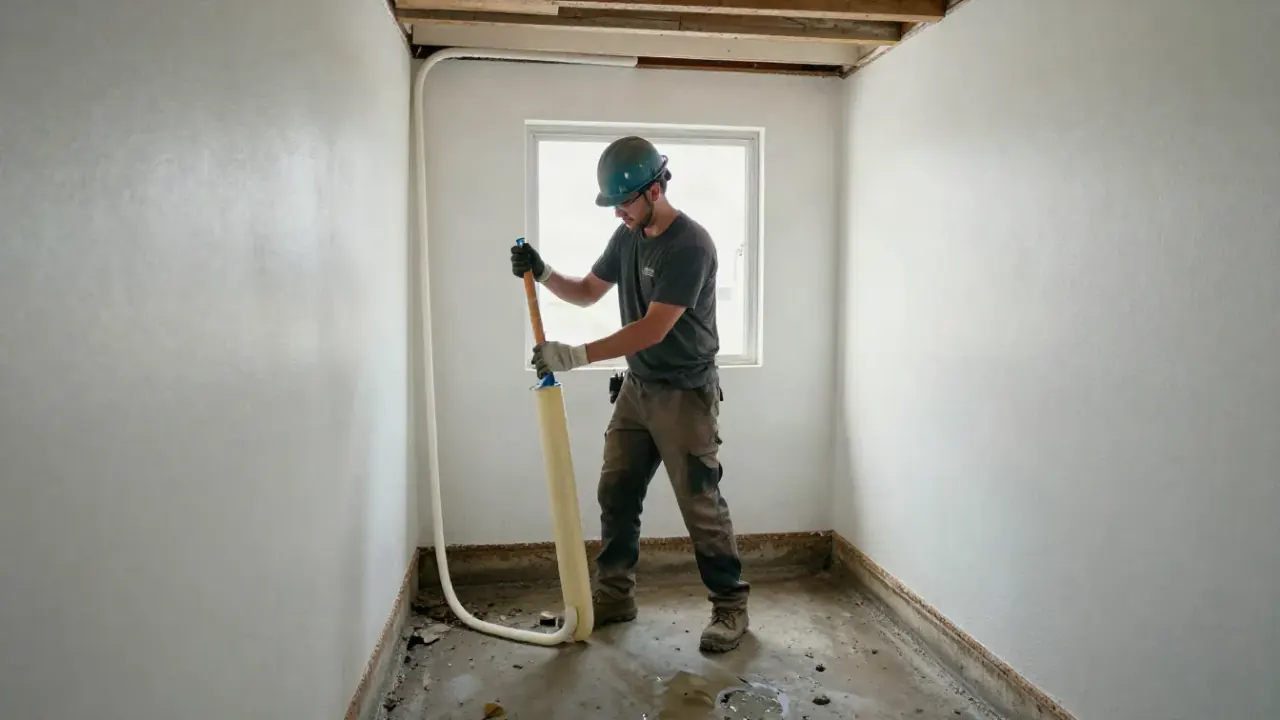
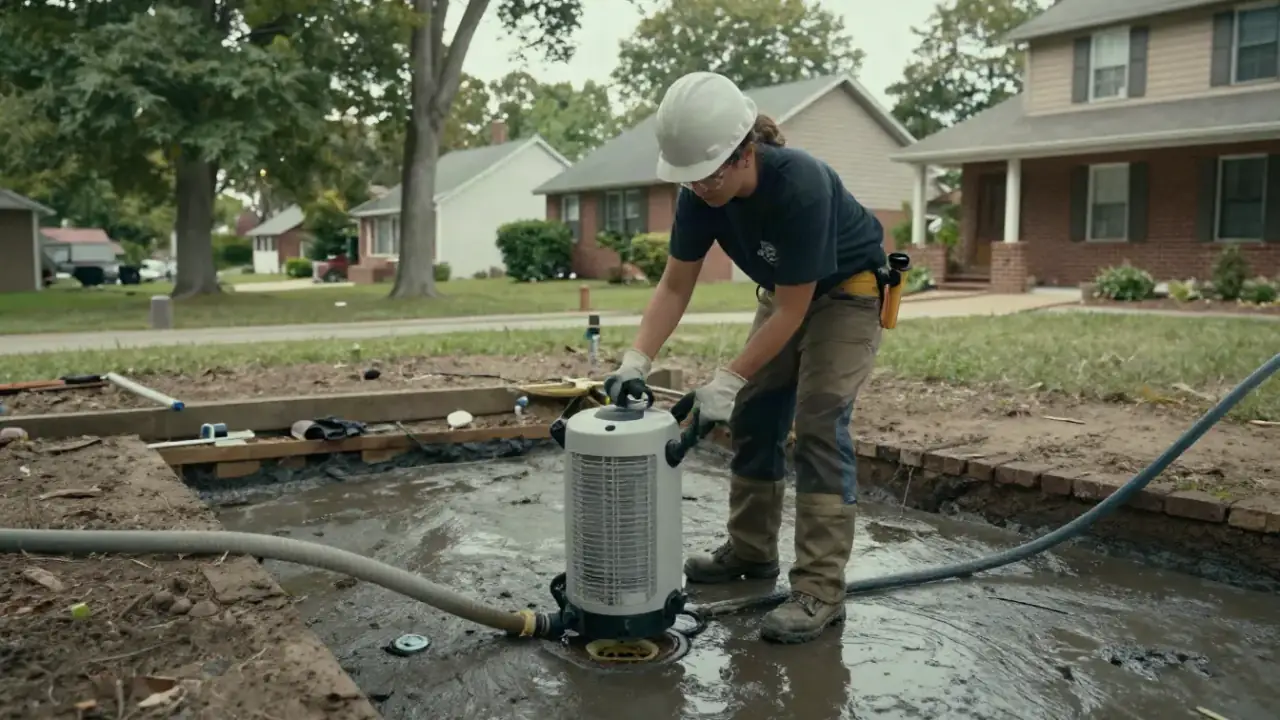
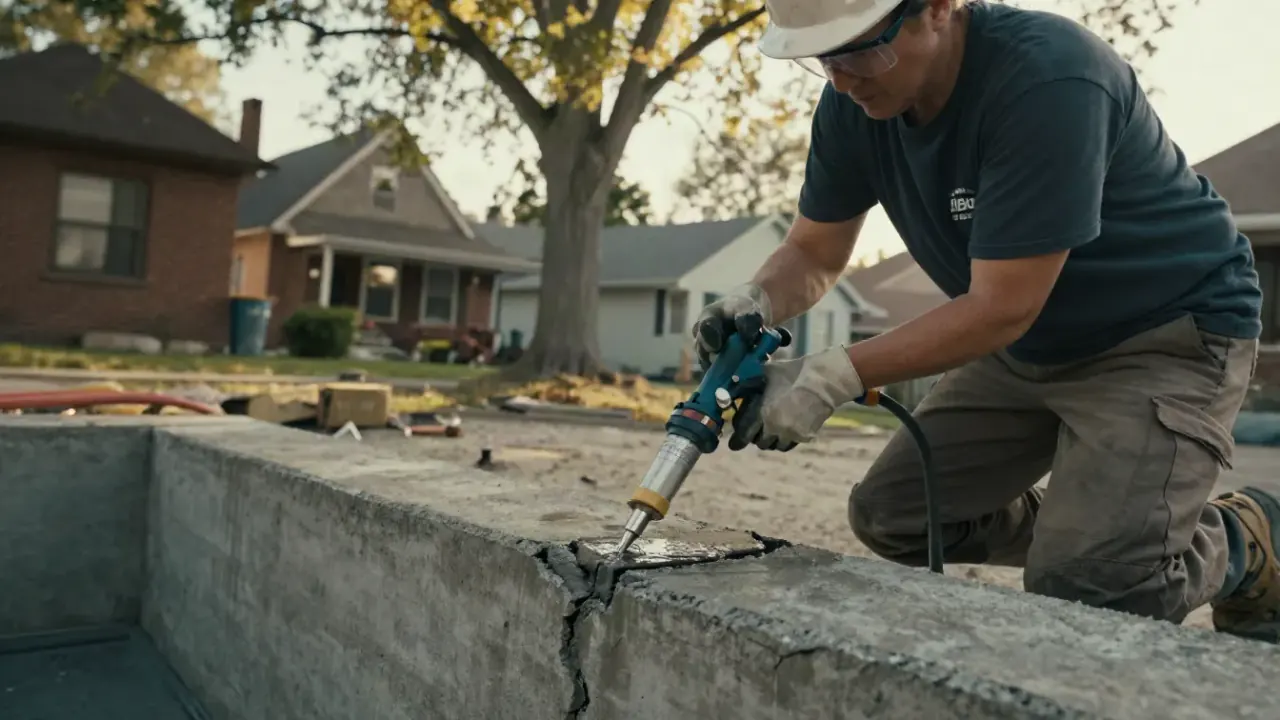
We place perforated drain tile in washed gravel, set the intended fall, and connect the line to its outlet or sump basin. A filter fabric or drainage mat is used where the design and soil conditions call for it. If a sump pump is part of the plan, we check the basin, discharge pipe, and pump operation as one system.
Set tile
Add gravel
Connect outlet
Test and Restore
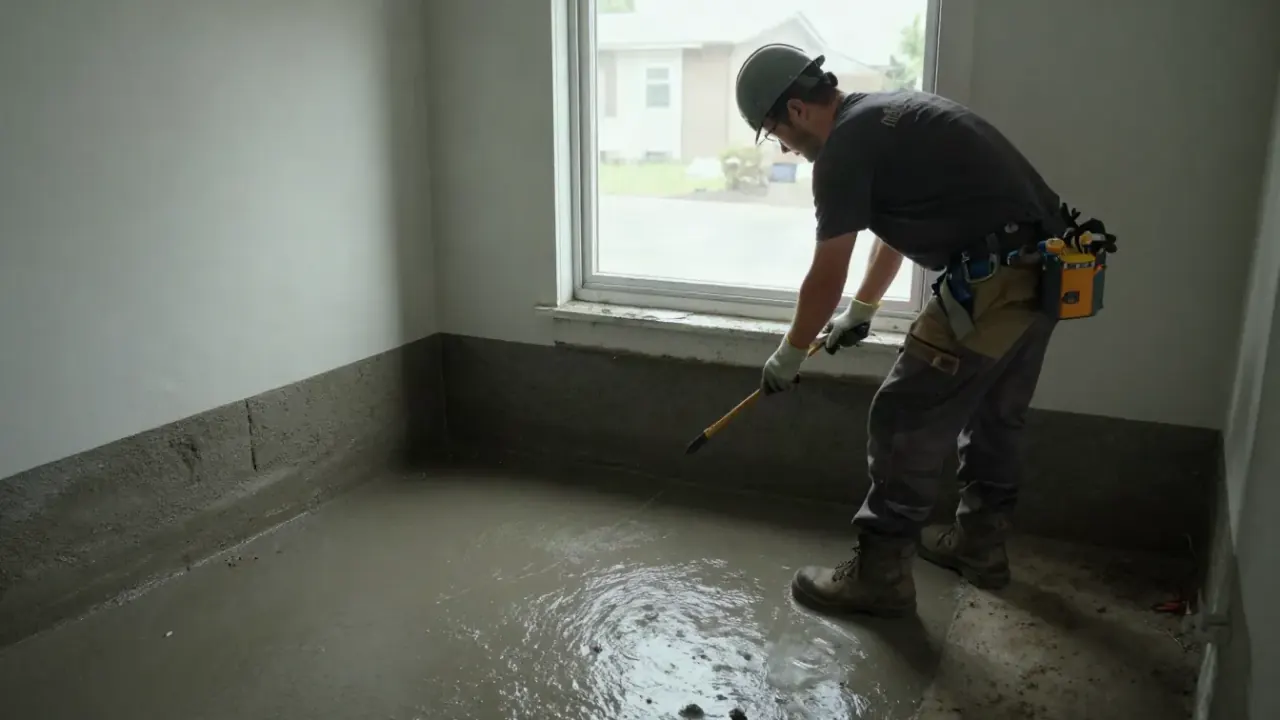
Before closing the trench or floor channel, we confirm the line drains toward the outlet and check accessible connections. Then we restore the disturbed area to the agreed finish and walk through the route with you. Most small installations take one to three days, with larger exterior excavation and concrete restoration requiring additional work time.
Check flow
Restore area
Walk through
Tools and Installation Methods
Move across a circle, or focus it and press Enter, for an illustrative thermal view of the photograph.
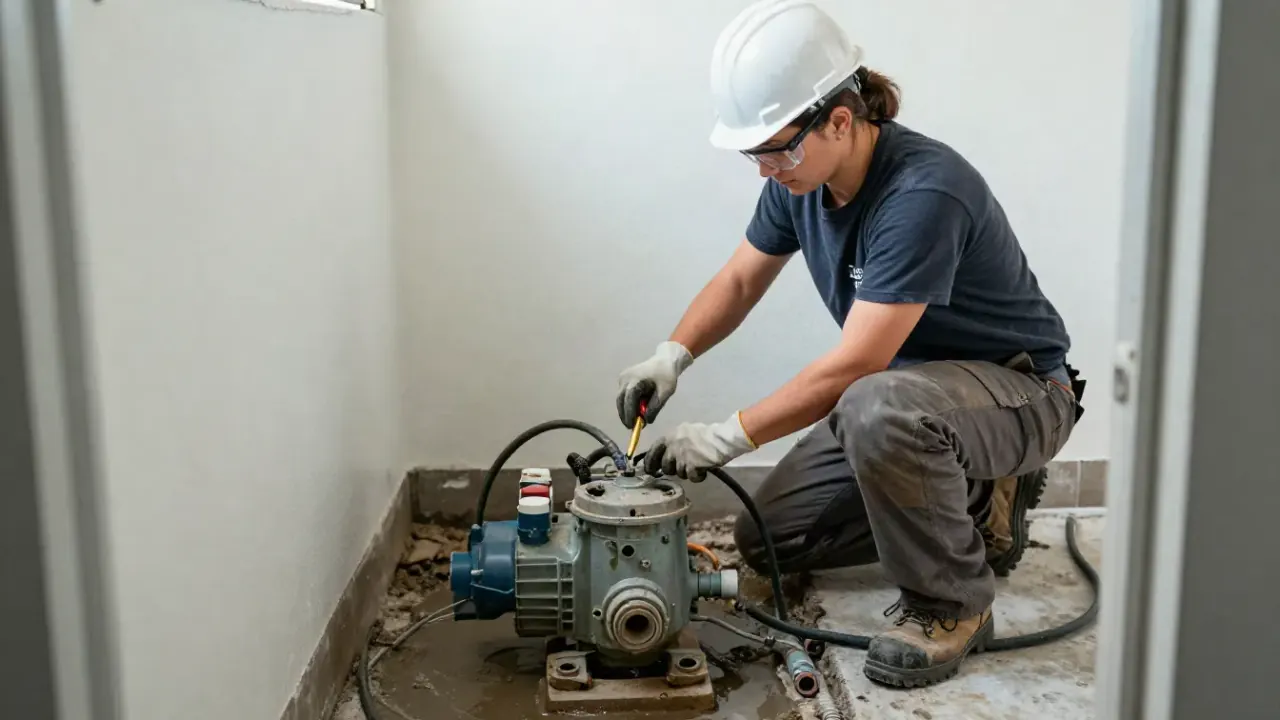
Trenching machine
We use a trenching machine where access and soil conditions allow it to create a consistent route. Tight spaces or utility conflicts call for controlled hand excavation instead.
Concrete saw
For an interior drain, a concrete saw opens the planned slab strip with a defined edge. We contain dust and debris, then prepare the channel for the drain assembly.
Moisture meter
A moisture meter helps compare damp locations and document where moisture is concentrated. Readings support the inspection but are interpreted alongside visible water paths and site conditions.
Perforated drain tile
Perforated drain tile collects groundwater through openings along the line and carries it toward a sump or outlet. We set the pipe in a gravel bed with the intended fall.
Zoeller sump pump
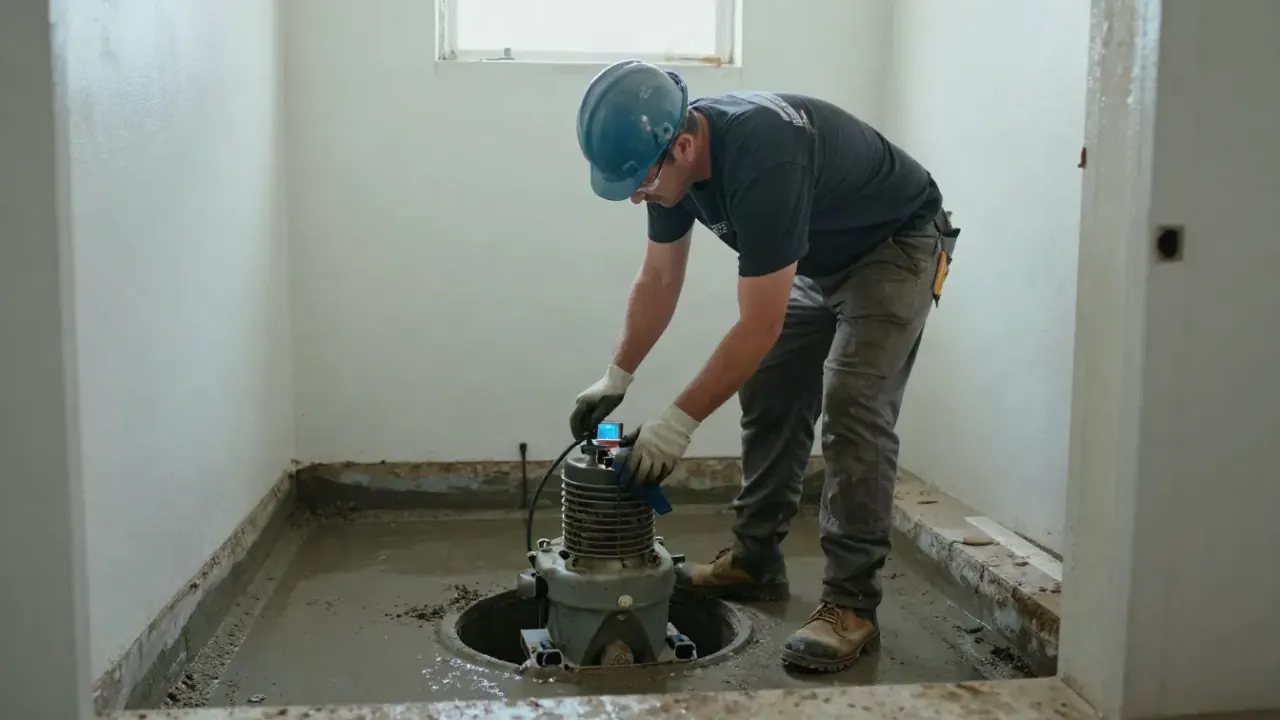
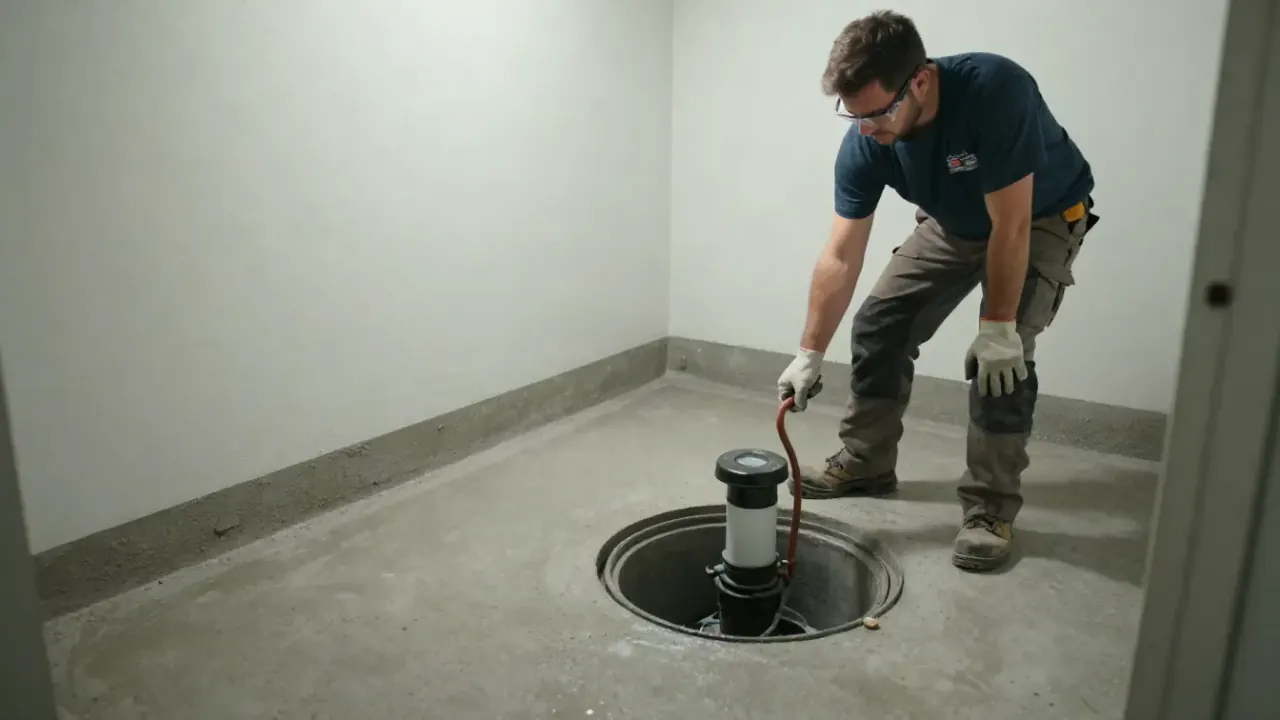
A Zoeller sump pump can move collected water from a basin when gravity discharge is not practical. We check the pump connection and discharge line as part of the drainage setup.
Thermal views are illustrative, generated from the photographs.
Methods
Slope-controlled trench installation
We set the trench and pipe so water travels continuously toward the planned outlet, avoiding dips that can hold sediment and water. Depth and slope depend on the site, receiving point, and local conditions. The route is checked before the gravel and finish material conceal the line.
Interior perimeter collection
Where exterior access is limited or water enters at the slab edge, we open a controlled channel inside the basement. Perforated tile in washed gravel collects seepage and routes it to a sump basin. We coordinate the channel with existing walls, floor finishes, and pump discharge.
Surface runoff separation
Roof runoff and groundwater are not automatically the same drainage problem. We inspect downspouts and yard grade, then decide whether a dedicated extension or surface correction should work alongside the French drain. Separating those flows helps the subsurface line handle the water it was designed to collect.
Discharge and flow verification
Before restoration, we check that the collection line reaches its planned outlet and that water can leave the system. For a pumped setup, we inspect the basin, pump response, and discharge pipe. We show you the accessible outlet and explain what to watch for during routine seasonal checks.
When a French Drain Makes Sense
Basement seepage
A Warren basement develops a damp floor edge after several days of rain or spring snowmelt.
We inspect the perimeter for seepage patterns, check the sump and discharge route, and determine whether interior collection is appropriate. If the slab must be opened, we mark the channel before concrete cutting and explain how it ties into the basin.
Outcome: Water entering at the floor edge has a collection path to the sump instead of spreading across the basement floor.
Saturated side yard
A side yard in Howland Center slopes toward the house and stays muddy after ordinary rainfall.
We assess the grade, the wettest section, and the space available for excavation. An exterior French drain can intercept subsurface water, while grading or a downspout correction may be needed to reduce surface runoff entering the same area.
Outcome: The planned route directs collected water away from the foundation and reduces persistent saturation beside the house.
Patio limits access
A Warren homeowner has a patio that prevents exterior excavation beside a leaking basement wall.
We review interior access and identify whether a perimeter channel can collect seepage below the slab edge. The route can connect to a sump basin without disturbing the patio, with wall crack repair handled separately if inspection finds a concentrated entry point.
Outcome: Drainage work can proceed from inside while leaving the patio intact, and collected water has a mechanical discharge route.
Crawl space water
A Niles crawl space has damp soil and musty odors after recurring groundwater entry.
We locate where water enters and check whether the space has a low point or outlet suitable for drainage. After controlling bulk water, we can discuss ground covering or a crawl space dehumidifier for remaining humidity rather than covering an active leak.
Outcome: Water is managed before moisture-control measures are added, reducing the chance of trapping unresolved seepage below the home.
Downtown WarrenHowland CenterBolindale
How Installation Works in Warren
french drain system installation in Warren has to account for local rain, winter snowmelt, and freeze-thaw cycles that keep soil saturated around foundations. Many homes have basements, and older properties can have aging drain tile, patched wall cracks, or additions that complicate excavation. Our team checks grading, downspouts, access, and the direction water travels before choosing an interior or exterior route.
We consider Ohio Residential Building Code compliance where the project requires it and keep discharge away from the foundation and neighboring structures. A french drain installation near me Warren Ohio visit also checks whether a sump pump is needed, since a route below the available gravity outlet cannot drain by slope alone.
In fall, leaves can block surface inlets and outlets; before winter, we check exposed discharge points for debris and damage. We use the site's elevations and conditions rather than assuming every Warren lot drains the same way.
Downtown Warren: Older foundations and close-set properties can limit exterior trench access. We assess whether interior collection offers a workable route without disturbing narrow side yards.
Howland Center: A sloped lawn or long downspout run can direct water toward the house. We check surface flow and the proposed outlet before setting a trench line.
Bolindale: Low yard sections can stay saturated after extended rain. We map the wet area and determine whether a yard drain can reach a safe discharge point.
Champion Heights: Basement seepage and runoff can combine on properties with uneven grading. We distinguish the sources before connecting any drain to a sump or outlet.
Freeze-thaw cycles leave foundation soil saturated through winter.: Repeated freezing and thawing can shift surface materials and stress exposed discharge lines. We plan protected outlets and check that the route does not end where winter runoff can return toward the basement.
Heavy rain sends runoff toward older basement foundations.: Concentrated water beside a wall increases the chance of seepage through joints or cracks. We inspect grading and downspouts alongside the proposed French drain so roof runoff does not overload the collection route.
We walk the wet area and explain likely water paths.
We protect nearby surfaces and prepare the marked route.
We check flow, review access points, and discuss upkeep.
From problem to finished result.
IllustrativeThe thermal view is generated from the photograph. It is not a measurement. Drag the handle, or use the arrow keys once it is focused.
Basement Floor Seepage
Before: After long rain, water appeared along one basement wall and spread several feet across the slab. Carpet near the edge stayed damp, and stored boxes had to be moved. The existing sump pump worked, but no collection channel carried seepage from that wall toward the basin.
After: An interior perimeter drain was installed along the affected run and connected to the sump basin. The channel captures water below the floor edge and carries it to the pump. The wet area was restored, and the homeowner no longer had standing water along that wall after the next heavy rain.
Keep the sump basin and discharge outlet clear, and listen for changes in pump operation. Check the discharge after storms and remove leaves or soil that could restrict flow.
Saturated Side Yard
Before: A low strip beside the home remained muddy for days after rain, with runoff collecting near the foundation. The lawn thinned, and water occasionally moved toward a basement window well. A nearby downspout emptied into the same saturated zone.
After: The crew redirected the downspout and installed a gravel trench across the wet section with an outlet away from the house. The low area stopped holding visible puddles within a few hours after rain, and the window well no longer received the same surface flow.
Keep the outlet visible and clear of leaves, particularly in fall. Check the downspout extension after mowing or landscaping so it continues to carry roof runoff away from the trench.
Drainage Beside a Patio
Before: A homeowner had recurring seepage at the basement slab edge, but a concrete patio ran directly along the outside wall. Exterior excavation would have required removing the patio, and the existing sump basin sat several feet from the damp area.
After: An interior channel was routed along the affected wall and connected to the existing basin. The crew checked pump discharge and restored the floor strip after testing flow. Water now reaches the sump without requiring patio demolition, and the floor edge remained dry through the next storm.
Test the sump periodically by following the manufacturer's operating instructions and keep the discharge point open. If dampness returns, check for a blocked outlet or new wall entry rather than covering the area.
Problems a Warren French Drain Can Address
French drain installation helps when water repeatedly gathers at a foundation, enters along a slab edge, or saturates a yard low spot. We identify whether the problem is groundwater, surface runoff, or a separate leak before selecting a solution.
Floor joint seepageWater keeps appearing along the basement floor jointRepeated seepage can soak carpet, damage stored items, and leave persistent musty odors. Continued moisture also makes it harder to keep the basement usable. We trace the wet perimeter and assess whether an interior drain can collect the seepage before it spreads across the slab. The channel leads water to a sump basin for discharge. If the wall has a distinct crack or window leak, we identify that entry point separately so the drain is not treated as a substitute for direct repair.
Yard saturationA low yard spot stays saturated after rainStanding water can damage grass, soften paths, and keep soil wet beside the foundation. It may also flow toward a basement entry as the ground becomes saturated. We map the slope and identify where water can safely leave the property. An exterior trench with perforated drain tile and washed gravel can collect water from the low area and guide it toward the planned outlet. We also check nearby downspouts because roof runoff can overwhelm an otherwise suitable yard drain.
Rain floodingBasement flooding follows heavy rainWater on the floor can ruin finishes and belongings, while repeated flooding points to a drainage or pumping problem that needs attention. We inspect water marks, the sump basin, pump operation, discharge line, and perimeter conditions. If a drain has failed or is absent, we plan an appropriate collection route and connect it to a working outlet. A wet/dry vacuum can remove standing water during cleanup, but correcting the source is the lasting repair.
Downspout runoffDownspouts discharge beside the foundationConcentrated roof runoff saturates the soil close to basement walls, adding water where it can seep through cracks or increase pressure. We check the downspout outlet and grading before laying new drain tile. A downspout extension kit or separate buried line may move roof water away from the foundation, while a French drain collects groundwater. Keeping these functions distinct helps prevent the drain from being overloaded by roof runoff.
Practical Results From Better Drainage
Collected water follows a planned route away from your foundation.
Less Foundation Seepage
A perimeter drain collects groundwater before it builds pressure against basement walls. That can reduce recurring seepage and damp floor edges, particularly when the trench connects to a functioning sump pump. We also check visible cracks and efflorescence so drainage work addresses the route water takes, not just the puddle you see.
Fewer Yard Puddles
A yard drain can intercept water that sits in a low spot after rain and move it toward an approved outlet. We use site elevations to avoid simply shifting the puddle toward a neighbor or walkway. For a french drain system near Warren, outlet placement and a continuous fall are central to performance.
Cleaner Basement Floors
Interior drainage collects seepage along the basement perimeter and directs it to a sump basin, where a submersible sump pump can discharge it outside. This approach limits standing water and helps protect stored belongings and floor finishes. It is especially useful when excavation outside is restricted by steps, patios, or close property lines.
A Clear Water Route
The finished system gives groundwater a defined route through perforated drain tile, washed gravel, and a discharge line. We test flow and inspect the outlet before restoring the work area. You also learn which downspouts and grading conditions should stay clear to reduce avoidable loading on the drain.
What you receive
Clear records you can keep and share.
Route notes
Marked collection route and discharge point.
Photo record
Installation stages before the trench is closed.
Flow checklist
Recorded outlet and connection checks.
Care notes
Access points and routine upkeep reminders.
Separate Groundwater From Runoff
Roof runoff and subsurface water need clear routes; combining them without planning can overload drainage.
Surface Water
Rain travels across soil, paving, and roof-drain outlets.
Check downspout discharge
Review yard grading
Keep inlets clear
Groundwater
Water moves through soil toward low areas and foundations.
Collect with perforated tile
Use a gravel bed
Set a continuous slope
Pumped Discharge
A sump moves collected water where gravity flow is unavailable.
Check basin condition
Inspect pump connection
Keep discharge open
System Components
Perforated tile
Washed gravel
Sump basin
Discharge pipe
Drainage mat
Downspout extension
Concrete channel
Outlet check
Service ZIP codes.
A list like this tells people straight away whether you cover their street. Not listed? Call and ask: it only takes a minute.
A short yard trench costs less than a full basement perimeter system requiring concrete removal and a sump basin. In 2026, we assess the route and explain upfront pricing before work begins. The range is a planning guide; the property layout and restoration requirements determine the final scope.
Yes, a correctly sloped French drain can collect groundwater and carry it to a working outlet, provided the design matches the water source. We check soil, grade, pipe route, and discharge before recommending installation. A drain will not fix every problem: a burst pipe, leaking window well, or wall crack may need separate repair. Keeping the outlet clear and correcting downspouts also helps the system perform through heavy rain and snowmelt.
Install the drain where water gathers or moves toward the structure, with a route that reaches a safe discharge point. That may be along a basement perimeter, beside a foundation, or across a persistently wet yard low spot. Our french drain installation near me Warren Ohio assessment traces water marks and checks grading before we mark a trench. We avoid directing discharge toward neighboring property, a basement entry, or another low area.
A properly installed French drain can serve for 20 to 30 years, with soil conditions, sediment, and outlet maintenance affecting its useful life. Washed gravel, suitable filter protection, and correct slope help limit clogging. We show you the accessible outlet and explain how to keep debris and downspout sediment out. If flow slows or pooling returns, inspect the discharge first; a drain snake can help diagnose an accessible blockage.
Stop guessing where the water is going. We will inspect the affected area, explain a practical drainage route, and discuss upfront pricing for your property. Call Warren Waterproofing Pros at (555) 123-4567 to arrange a French drain assessment.
Tell us where water is showing up, how long it has been happening, and whether a sump pump or drain is involved. Call (555) 123-4567 during our weekday business hours, Monday through Friday, 8 a.m. to 6 p.m. We serve Warren, Ohio, and nearby communities, and will help you plan the right inspection for your basement or crawl space.